
GastroLife · Digestive health explained
What Is the Migrating Motor Complex? Your Gut’s Between-Meal Cleaning System
Your digestive system continues working between meals. During these periods, the stomach and small intestine produce a repeating pattern of muscular activity called the migrating motor complex, or MMC.
Often described as the gut’s “housekeeping” system, the MMC helps move material left behind after digestion onwards through the digestive tract. It plays an important role in keeping the small intestine functioning normally.
What does “migrating motor complex” mean?
The name describes how this pattern works:
- Migrating: the activity travels along the digestive tract.
- Motor: it involves muscular contractions.
- Complex: it consists of a coordinated cycle with several phases.
The MMC occurs during fasting periods, including between meals and overnight. Its strongest waves can begin in the stomach or small intestine and move further along the small bowel. Eating interrupts this pattern as the gut switches to the activity needed to process a meal. [1]
What does the MMC do?
After a meal has been digested, some residual material remains in the stomach and small intestine. The MMC helps move this material onwards.
Think of it as a series of sweeping movements that helps clear what has been left behind and prepares these parts of the digestive tract for the next meal. This includes moving residual food particles and digestive secretions along the bowel. [2]
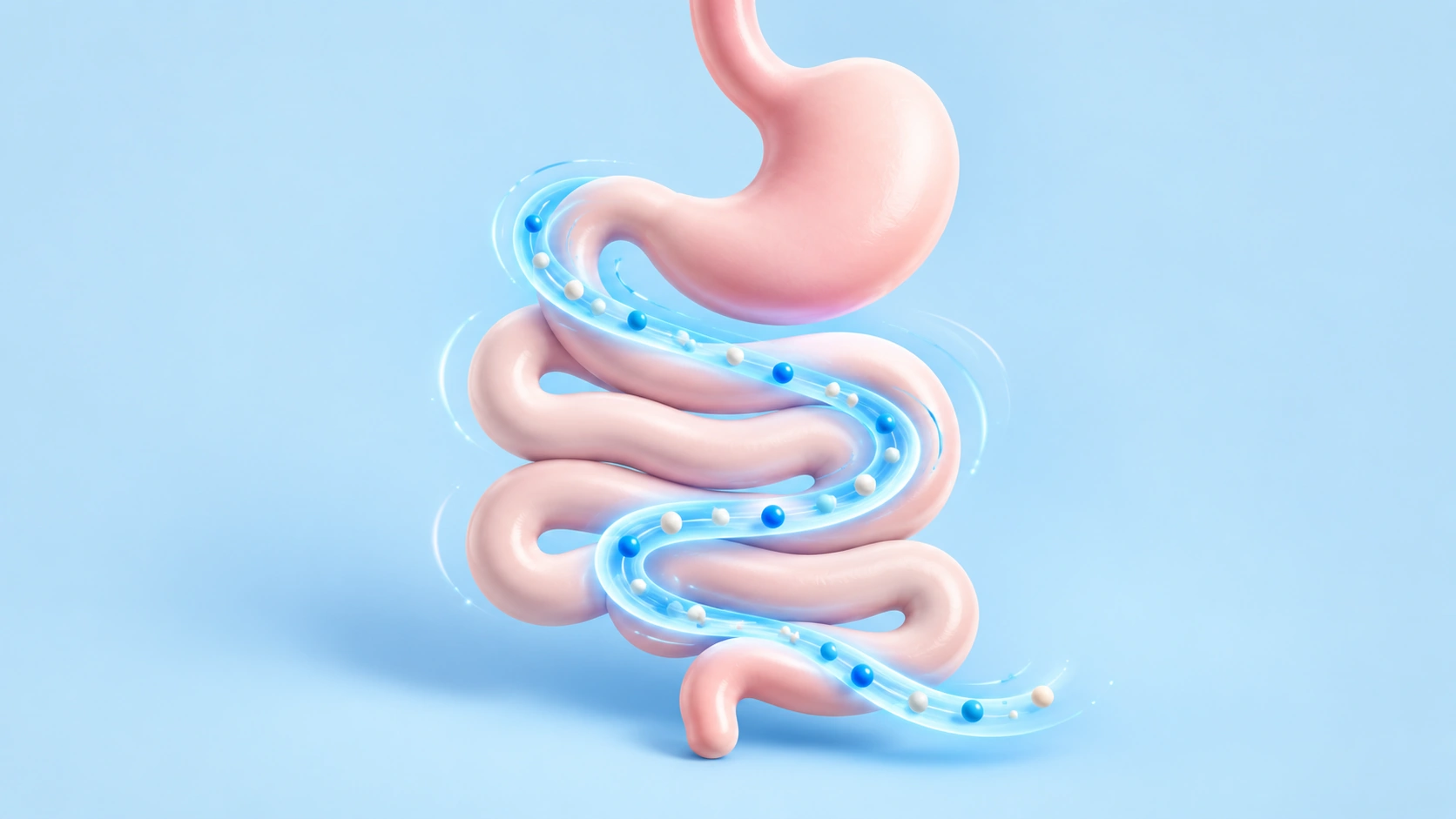
This movement also helps limit the accumulation of bacteria in the small intestine. Research has linked absent or severely disordered MMC activity with bacterial overgrowth, supporting its role in maintaining the small intestine’s normal bacterial balance. [3]
How does the MMC work?
The MMC is usually described as having four phases:
A quiet phase
There is little or no muscular activity.
A building phase
Irregular contractions become more frequent.
A sweeping phase
A short burst of strong, regular contractions travels along the digestive tract.
A transition phase
Activity settles back into the quiet phase, allowing the cycle to begin again.
The third phase produces the most pronounced sweeping activity. During fasting, these bursts commonly recur approximately every 90–120 minutes, although timing varies. [4]
This interval describes the fasting cycle; it does not mean a sweeping wave will occur exactly 90 minutes after eating.
What controls the MMC?
The MMC depends on coordinated signals involving the gut’s nerves and hormones.
One of these hormones is motilin, which is released by specialised cells in the small intestine. Motilin levels fluctuate during fasting, and the hormone is particularly involved in triggering the strong MMC contractions that begin in the stomach. The control of activity within the small intestine is more complex and involves additional signalling mechanisms. [1], [2]
What happens to the MMC when you eat?
Eating changes the gut’s priorities. The digestive tract switches from its between-meal pattern to movements that mix food with digestive juices and support digestion and absorption.

Once the fed period has passed, the fasting pattern can return. The timing varies with the meal and between individuals, so the MMC does not operate on a fixed timetable. Human studies have demonstrated substantial variation in both its activity and the length of interruption after eating. [5]
How is the MMC linked to SIBO?
Small intestinal bacterial overgrowth (SIBO) occurs when excessive numbers of bacteria in the small intestine cause digestive symptoms.
When the MMC is not working effectively, its normal clearing activity may be reduced. Material and bacteria can remain in the small intestine for longer, creating conditions that favour bacterial overgrowth. Impaired MMC activity can therefore contribute to the development of SIBO. [3], [6]
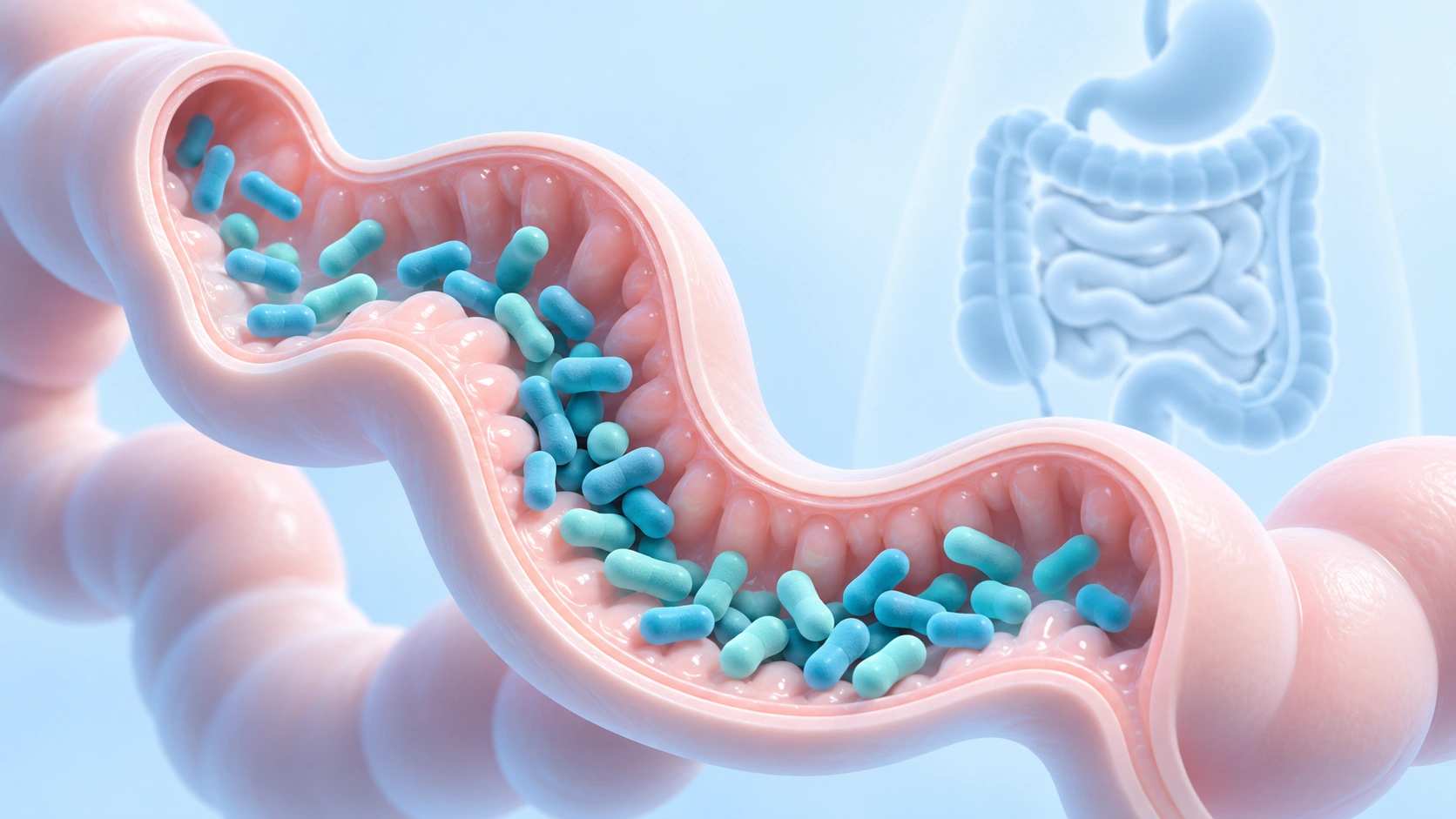
However, SIBO has several possible causes. Having SIBO does not automatically mean that the MMC is impaired, and symptoms such as bloating, excess gas, abdominal discomfort and diarrhoea can also occur with other digestive conditions. A SIBO breath test assesses gas patterns that may support a diagnosis; it does not directly measure MMC function. [6]
GastroLife offers SIBO breath testing at home and in clinic. Your report can be reviewed with your GP or consultant alongside your symptoms and medical history.
Learn more about SIBO breath testing →Information provided is for educational use only and should not replace professional medical advice or diagnosis.
References
- Deloose E, et al. The migrating motor complex: control mechanisms and its role in health and disease. Nature Reviews Gastroenterology & Hepatology. 2012;9:271–285. Read reference.
- Motilin fluctuations in healthy volunteers determined by liquid chromatography mass spectrometry. Frontiers in Endocrinology. 2024;15:1348146. Read reference.
- Vantrappen G, et al. The interdigestive motor complex of normal subjects and patients with bacterial overgrowth of the small intestine. Journal of Clinical Investigation. 1977;59:1158–1166. Read reference.
- Takahashi T. Interdigestive migrating motor complex—its mechanism and clinical importance. Journal of Smooth Muscle Research. 2013;49:99–111. Published online March 2014. Read reference.
- Kellow JE, et al. Human interdigestive motility: variations in patterns from esophagus to colon. Gastroenterology. 1986;91:386–395. Read reference.
- Pimentel M, et al. ACG Clinical Guideline: Small Intestinal Bacterial Overgrowth. American Journal of Gastroenterology. 2020;115:165–178. Read reference.
GastroLife · Digestive Health Testing Centre


