
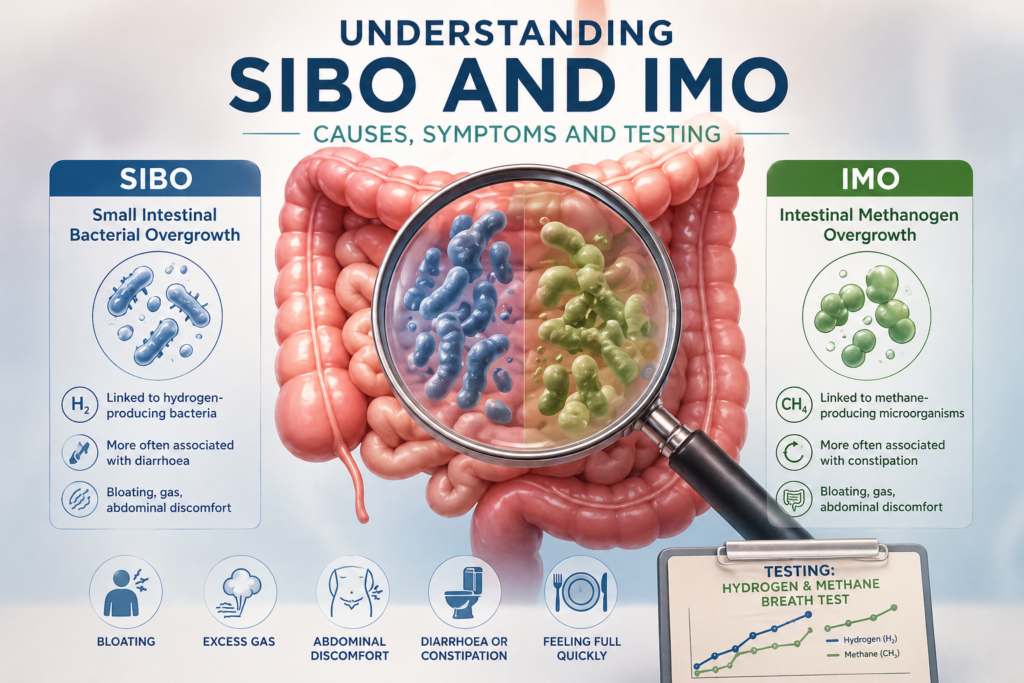
Understanding SIBO and IMO: Causes, Symptoms and Testing
Digestive symptoms such as bloating, excess gas, and changes in bowel habits are common. For some people, however, these symptoms persist despite dietary changes or treatment. Two conditions increasingly recognised in this context are SIBO and IMO.
This article explains what they are, how they differ, and how they are identified.
What is SIBO?
Small Intestinal Bacterial Overgrowth (SIBO) occurs when bacteria that are normally found in the large intestine grow in excessive numbers within the small intestine.
The small intestine is primarily for digestion and nutrient absorption. When excess bacteria are present, they begin fermenting food earlier than they should, producing gas and contributing to symptoms.
What is IMO?
Intestinal Methanogen Overgrowth (IMO) is a related but distinct condition.
Rather than involving bacteria, IMO is associated with methane-producing microorganisms known as methanogens. These organisms behave differently to typical gut bacteria and can have a direct impact on how the gut functions.
Methane has been shown to slow intestinal transit, which is why IMO is more commonly associated with constipation.
SIBO vs IMO: What’s the Difference?
- SIBO is linked to hydrogen-producing bacteria
- IMO is linked to methane-producing microorganisms
- SIBO is more often associated with diarrhoea
- IMO is more commonly associated with constipation
Some individuals may have a combination of both, which can result in mixed symptoms.
How Methane is Produced in the Gut
Methane production in the gut is closely linked to hydrogen. Methanogens use hydrogen as a fuel source, converting hydrogen and carbon dioxide into methane through a process known as Methanogenesis.
This means methane is not produced independently, it is formed by using up hydrogen. As a result, some patients with IMO may not show high hydrogen levels on testing, because the hydrogen is being converted into methane.
This interaction is clinically relevant, as methane is associated with slower gut movement, contributing to constipation.
Common Symptoms
Symptoms of SIBO and IMO can overlap significantly with other digestive conditions, particularly IBS.
Typical symptoms include:
- Persistent bloating, often worse after eating
- Excess gas or visible distension
- Abdominal discomfort or cramping
- Diarrhoea, constipation, or alternating bowel habits
- Feeling full quickly when eating
Because these symptoms are non-specific, further investigation is often needed.
Why Do SIBO and IMO Occur?
There is usually an underlying factor that allows microorganisms to accumulate in the small intestine.
Common contributing factors include:
- Reduced gut motility
- Previous gastrointestinal infections
- Structural changes in the digestive tract
- Conditions such as coeliac disease or IBS
- Use of medications that affect gut function
In many cases, more than one factor may be involved.
How Are SIBO and IMO Identified?
The most commonly used method is breath testing – Hydrogen and Methane Breath Testing.
This test measures gases produced in the gut over time. Patterns in hydrogen and methane levels can help indicate whether SIBO, IMO, or a combination of both may be present.
It is a non-invasive and widely used tool in clinical practice.
SIBO, IMO and IBS
Many individuals diagnosed with IBS may have underlying SIBO or IMO contributing to their symptoms.
While they are not the same condition, the overlap in symptoms is significant, and testing can help provide additional clarity in some cases.
When Should You Consider Testing?
Testing may be worth considering if:
- Symptoms are ongoing or unexplained
- Standard treatments have not been effective
- There is significant bloating or gas after meals
- There is a history of digestive conditions
Final Thoughts
SIBO and IMO are increasingly recognised as potential contributors to persistent digestive symptoms. Although they can present similarly to other conditions, they involve different mechanisms within the gut.
Accurate identification through appropriate testing can help provide clarity and support further clinical decision-making.
To book a test please click or to order a home kit click the button below.


