
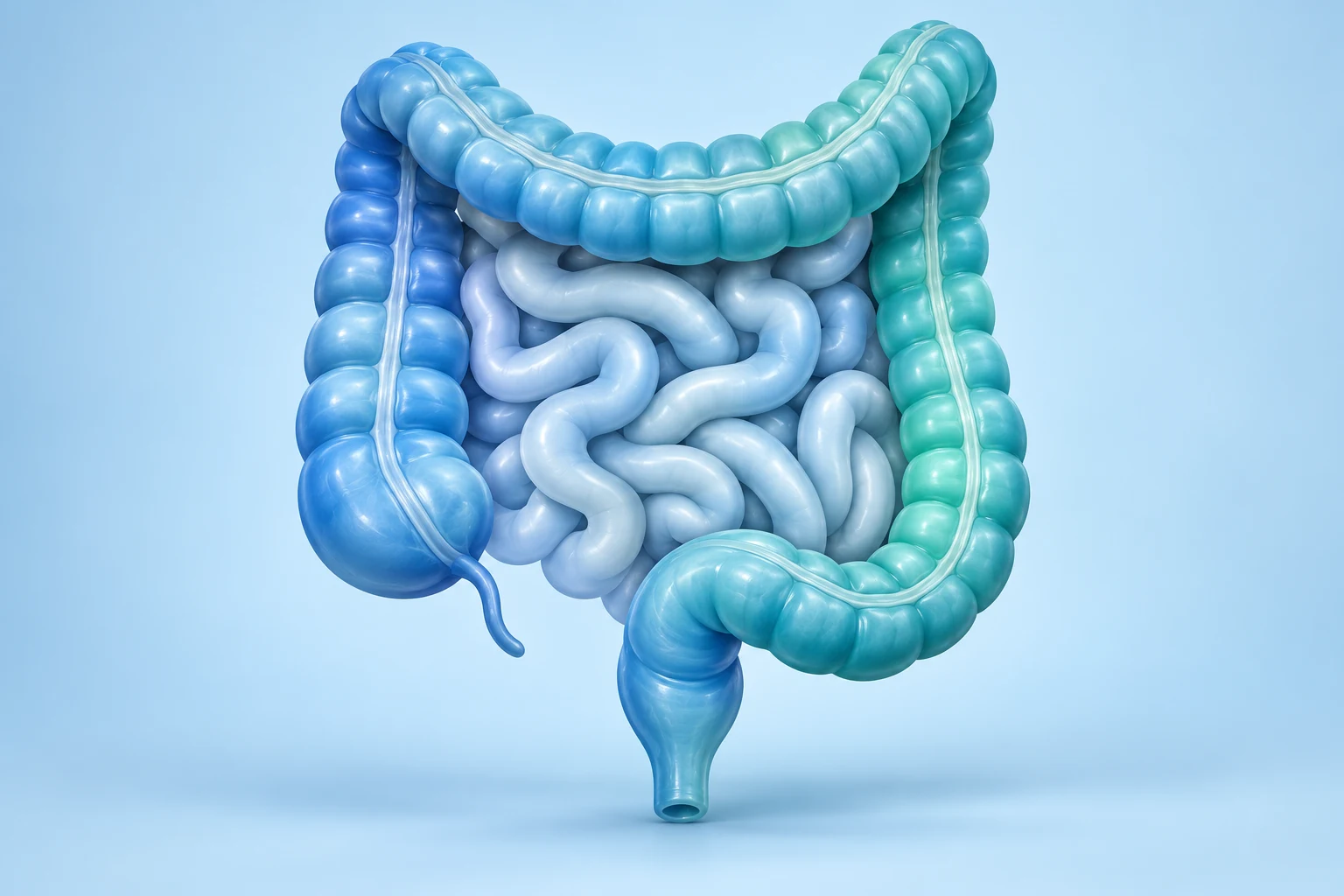
Discover what happens in your large intestine, why toilet habits vary, and why constipation can involve more than fibre.
Some people go to the toilet every morning. Others have a bowel movement every second day. It is easy to wonder whether your own pattern is normal, especially when it changes.
Understanding how the colon works helps put these differences into context. Bowel health involves how stool forms, how it moves, and how comfortably you can pass it.
Where is the colon, and what does it do?
The colon is part of the large intestine. It follows the small intestine and has four main sections: the ascending, transverse, descending and sigmoid colon. These lead to the rectum, which holds stool before a bowel movement. [1]
By the time digestive contents reach the large intestine, most nutrients have already been absorbed in the small intestine. The remaining material includes fluid, undigested food components and shed cells from the digestive tract. [2]
What happens in the large intestine?
The large intestine absorbs more water, helping turn liquid waste into formed stool. Bacteria also help break down some of the material that remains. Muscular contractions mix and move the contents towards the rectum. This movement is part of a process called peristalsis. [2]
When stool moves slowly through the colon, more water can be absorbed, leaving it harder and drier. This helps explain why slow bowel transit can make passing stool difficult. [3]
How often should you go to the toilet?
A commonly used range for adult bowel frequency is three times a day to three times a week. There is no requirement to have a bowel movement every day. Your usual pattern, stool consistency and comfort also matter. [3]
What determines your bowel pattern?
Several influences can act together:
- Food and fluids: changes in what you eat, low fibre intake and dehydration can affect bowel habits. [6]
- Activity and routine: reduced movement, travel or repeatedly putting off the urge to go can contribute to constipation. [6]
- Medicines and supplements: some medicines and iron supplements can slow or disrupt your usual pattern. [6]
- Bowel movement and emptying: slow transit, pelvic floor problems and conditions such as IBS can play a role. [5]
Stress and anxiety can also affect bowel habits. A change during a stressful period is worth recording alongside changes in food, medicines or routine. [6]
Why do you sometimes need the toilet after eating?
Eating can trigger a natural response called the gastrocolic reflex, which increases activity in the bowel. This can explain an urge to go after a meal. It does not mean the food you have just eaten has already travelled all the way through your digestive system: the response helps move contents already in the bowel. [4]
Why constipation is not just about fibre
Fibre can help, particularly when your intake is low. But adding more does not address every possible cause of constipation.
Motility describes the muscular activity that moves contents along the digestive tract. If stool travels slowly, changing fibre alone may not fully resolve the problem. Some people also have difficulty coordinating the pelvic floor muscles needed for emptying. Other contributors can include medicines or medical conditions such as an underactive thyroid. [5]
Increasing fibre too quickly, or adding excessive amounts, can worsen bloating and discomfort for some people. Persistent symptoms deserve an individual assessment rather than repeated attempts to add more fibre. [4]
What does a healthy bowel movement look like?
A comfortable bowel movement is usually soft, formed and easy to pass. The Bristol Stool Chart helps describe stool consistency: types 1–2 are hard or lumpy, types 3–4 are generally well formed, and types 6–7 are mushy or watery. [7]
The chart is a useful way to describe changes to a healthcare professional. It does not diagnose the cause of those changes.

Practical ways to support comfortable bowel habits
- Include fibre in your diet and increase it gradually if your intake is low.
- Drink enough fluids, following any fluid restriction advised by your healthcare team.
- Keep physically active within your abilities.
- Allow time for the toilet and respond to the urge to go.
- Try a low footstool so your knees sit above your hips. [4] [6]
If symptoms continue, keep a brief record of frequency, stool consistency, straining and any associated pain. This can make a discussion with your GP more useful.

When should you speak to your doctor?
Contact your GP about persistent or unexplained changes, ongoing constipation, blood in your stool, unexplained weight loss or persistent tiredness. [6]
Seek urgent medical assessment for severe or constant abdominal pain, particularly with vomiting, marked swelling or an inability to pass wind or stool. [5]


