
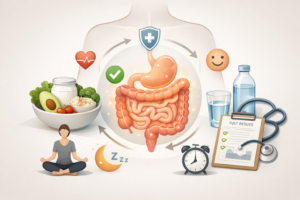
Gut health continues to be one of the most talked-about areas in health and wellness -and for good reason. The gut plays a central role in digestion, immune function, hormone balance, skin health, and even mood.
As we begin 2026, the focus has shifted away from quick fixes and toward understanding root causes, personalised testing, and sustainable daily habits. Below are practical, evidence-based tips to help support gut health in the year ahead.
- Prioritise digestive basics before supplements
Before reaching for digestive supplements, it’s important to get the fundamentals right. Many gut symptoms stem from simple digestive stress rather than a lack of supplements.
Helpful habits include:
- Eating meals in a calm, unhurried environment
- Chewing food thoroughly
- Avoiding constant snacking between meals
- Allowing time between dinner and sleep
These steps support normal stomach acid production and motility which are both essential for healthy digestion.
- Support the gut–brain connection
Stress has a direct impact on gut function. Chronic stress can slow digestion, alter gut motility, and worsen symptoms such as bloating, reflux, or irregular bowel movements.
Gut health care and the gut-brain axis; simple strategies that can help include:
- Short daily walks
- Breathing exercises before meals
- Reducing screen use while eating
- Prioritising consistent sleep patterns
Supporting the nervous system is often just as important as dietary changes.
- Be selective with fibre, not excessive
Fibre remains essential for gut health, but more is not always better – particularly for individuals with bloating or IBS-type symptoms.
Instead of dramatically increasing fibre intake:
- Introduce fibre gradually
- Rotate fibre sources rather than eating the same foods daily
- Pay attention to how your body responds
- Consider fermented foods carefully
Fermented foods like kefir, yoghurt, sauerkraut, and kimchi can be beneficial for some people. However, they are not suitable for everyone, particularly if symptoms worsen after consumption.
The emphasis should be on individual tolerance rather than blanket recommendations. If fermented foods cause bloating or discomfort, it may be worth exploring why before continuing.
- Stay hydrated – timing matters
Adequate hydration supports stool consistency and gut motility, but timing can matter. Constant sipping during meals may dilute digestive secretions for some individuals.
A helpful approach is:
- Hydrate well between meals
- Sip lightly during meals if needed
- Increase fluids earlier in the day rather than late at night
- Don’t ignore persistent gut symptoms
Ongoing symptoms such as bloating, constipation, diarrhoea, reflux, or unexplained skin issues are not something to simply “live with.”
Functional digestive testing can help identify:
Understanding the cause allows for targeted, effective support rather than trial-and-error approaches.
Final thoughts
Gut health in 2026 is about listening to your body, understanding your individual digestive needs, and addressing root causes rather than masking symptoms.
If digestive issues are affecting your quality of life, professional guidance and appropriate testing can provide clarity and direction – helping you make informed, sustainable changes for long-term gut health.
*Information provided is for educational use only and should not replace professional medical advice or diagnosis.


